

You get the call, you fly in for the funeral, and then you fly home. But the house is still there: a lifetime of furniture, clothes, paperwork and garage shelves, sitting empty in a city you no longer live in. You have a job, maybe kids, and a limited number of vacation days. How do you clean out a parent’s house when you live hundreds of miles away?
Most advice about clearing out a parent’s house assumes you can drive over every weekend. This guide is for everyone who can’t. It’s a long-distance playbook in three parts: what to do from home before you travel, how to use one short visit well, and how to finish the job without flying back again. We’ve used Cincinnati and Hamilton County as the example throughout, but the steps work anywhere. If you live close enough to work on the house every weekend, our week-by-week estate cleanout checklist for Ohio families is the better fit.
Step 1: Sort Out Authority and Paperwork First
Before anyone touches the contents of the house, be clear about who has the legal authority to make decisions. That’s usually the executor named in the will, or an administrator appointed by the probate court if there’s no will.
- Living out of state doesn’t always rule you out. In Ohio, a nonresident named as executor in a will can usually serve if they’re related to the deceased by blood or marriage, though an administrator (when there’s no will) generally has to be an Ohio resident. Rules differ by state, so check with the probate court or an attorney.
- Smaller estates may have a simpler path. Ohio offers simplified procedures for smaller estates. The Hamilton County Probate Court can explain the options, and a local estate attorney can handle the court side for you.
- Keep every receipt. Reasonable costs for travel, locksmiths, insurance, utilities, cleaning and junk removal are often reimbursed from the estate. A simple spreadsheet and a folder of receipts will save arguments later.
Don’t start giving away or selling anything of value until the executor and attorney say it’s appropriate, and make sure siblings agree on the process in writing.
Step 2: Protect the House While It Sits Empty
An empty house is at risk from burst pipes, break-ins and insurance gaps. Handle these from home in the first week or two:
- Call the homeowners insurer right away. Many policies limit coverage after a home has been vacant for 30 or 60 days, and can exclude vandalism, theft, broken glass and water damage. Tell the insurer the owner has died and ask about a vacancy endorsement or a vacant-home policy. One detail families miss: emptying the house can change it from “unoccupied” to “vacant” in the insurer’s eyes, so call before the final cleanout, not after.
- Keep the utilities on. Heat in winter prevents frozen pipes. Power keeps lights, sump pumps and alarms working. Shut them off only after the cleanout and any repairs are done.
- Forward the mail. USPS requires the executor or administrator to file in person at a Post Office with proof of appointment. A death certificate alone isn’t enough. You can also register your parent’s name on the Deceased Do Not Contact list at DMAchoice.org to cut down junk mail.
- Make the house look lived in. Put lights on timers, arrange lawn care or snow removal, and stop newspaper deliveries.
- Control the keys. Find out who has a spare (neighbors, caregivers, cleaners) and consider changing the locks. Then install one lockbox and share the code only with people you’ve vetted.
- Recruit a neighbor. A trusted neighbor who walks past once a week and texts you a photo is worth more than any app.
Step 3: Build a Local Team You Can Trust
You can’t be there, so you need people who can. Most long-distance families end up with some version of this team:
| Role | What they do | How to vet them from a distance |
|---|---|---|
| Family lead or executor | Makes decisions and approves spending | Agree on roles and a group chat with siblings early |
| Trusted neighbor or friend | Checks the house, meets vendors, collects packages | Someone your parent already trusted |
| Real estate agent | Coordinates access for repairs, showings and inspections | Ask about experience selling inherited homes |
| Estate sale company or senior move manager | Values, sells and disperses contents | Insured and bonded, written contract, references, interview 2 or 3 |
| Junk removal company | Removes what’s left, donates and recycles first | Licensed and insured, firm written quote, photos after the job, donation receipts |
Senior move managers are worth knowing about. Members of the National Association of Senior and Specialty Move Managers (NASMM) handle sorting, estate dispersal through sale, consignment or donation, waste removal, and cleaning. Their directory is a good place to start if your parent was moving to care rather than passing away, or if you want one person coordinating everything.
Step 4: Do the First Pass by Video
Video is the most useful tool a long-distance family has, and it’s the step most guides skip.
- Do a live walkthrough. Have your local helper (or yourself, on your first trip) walk every room on FaceTime or Zoom with siblings joining from wherever they live. Open closets, cabinets, and the garage.
- Record a room-by-room video. It becomes a record of the home’s contents for the estate, the insurer, and any later questions.
- Build a shared photo inventory. Photograph furniture, art, jewelry, tools, and keepsakes, and put the photos in a shared folder or spreadsheet with a “claimed by” column. Each family member marks what they want before anyone travels.
- Flag valuables for appraisal. Art, jewelry, silver, coins, and collections should be looked at by a qualified appraiser before they’re divided or sold.
This is also the moment to decide what happens to everything else. The sorting decisions are the same wherever the house is, and this guide on what to do with a deceased parent’s belongings and how to decide what to keep, donate, sell or recycle walks through it category by category, including photos, papers, and items that need special handling. Use it to agree on the five piles before you book a flight.
Step 5: Plan One Efficient Trip
If you can only get there once, make the visit count. A three-day plan works well for most homes:
Day 1: Papers and valuables. Find the will, financial statements, tax returns, property and vehicle titles, insurance policies and passwords. Remove cash, jewelry and anything small and valuable. Check pockets, books, freezers and the backs of drawers. Box the documents and take them home.
Day 2: Family items and shipping. Pack the items claimed on the inventory sheet. For anything too large to carry, get quotes from a shipping service or a moving company that handles partial loads. Label every box with the recipient’s name.
Day 3: Meet the vendors. Walk the house in person with the estate sale company or move manager, the junk removal company and the realtor. Get written quotes, agree on the order of work, confirm the lockbox code and set dates. Leave knowing who does what next.
Before you leave, take photos of every room again. You’ll want a “before” record.
Step 6: Let the Pros Finish the Job
Once family items are out, the remaining contents usually move through three stages.
1. Sell what’s worth selling. If the house has enough quality furniture, collectibles and tools, an estate sale company can run a sale. In the Cincinnati area, commissions typically run around 35% to 50% of sales, and many companies want a minimum of several thousand dollars in expected sales before they’ll take a job. Ask what happens to unsold items and whether cleanout is included or extra. If you’re not sure a sale is worth it, compare the two routes in estate sale vs. estate cleanout.
2. Donate what’s usable. In Cincinnati, St. Vincent de Paul accepts clean furniture, clothing, housewares, books and linens and offers free pickup for leftovers (513-421-2273). Habitat for Humanity’s Greater Cincinnati ReStores offer free pickup for furniture, appliances, building materials and tools, usually about a week out (513-721-4483), but they don’t take TVs, mattresses, carpet, sleeper sofas, pianos and a long list of other items. Goodwill accepts drop-offs, though pickup is a paid service.
3. Haul away the rest. This is where long-distance families usually need help. Cincinnati’s bulk item collection is free for homes with City trash service, but it’s by appointment, five items at a time, and items can’t go out before the night before. A full house needs dozens of appointments and someone on site every time. Household hazardous waste such as pesticides, solvents and oil-based paint goes to scheduled Hamilton County drop-off events that need advance registration, and medications go to a pharmacy take-back kiosk instead.
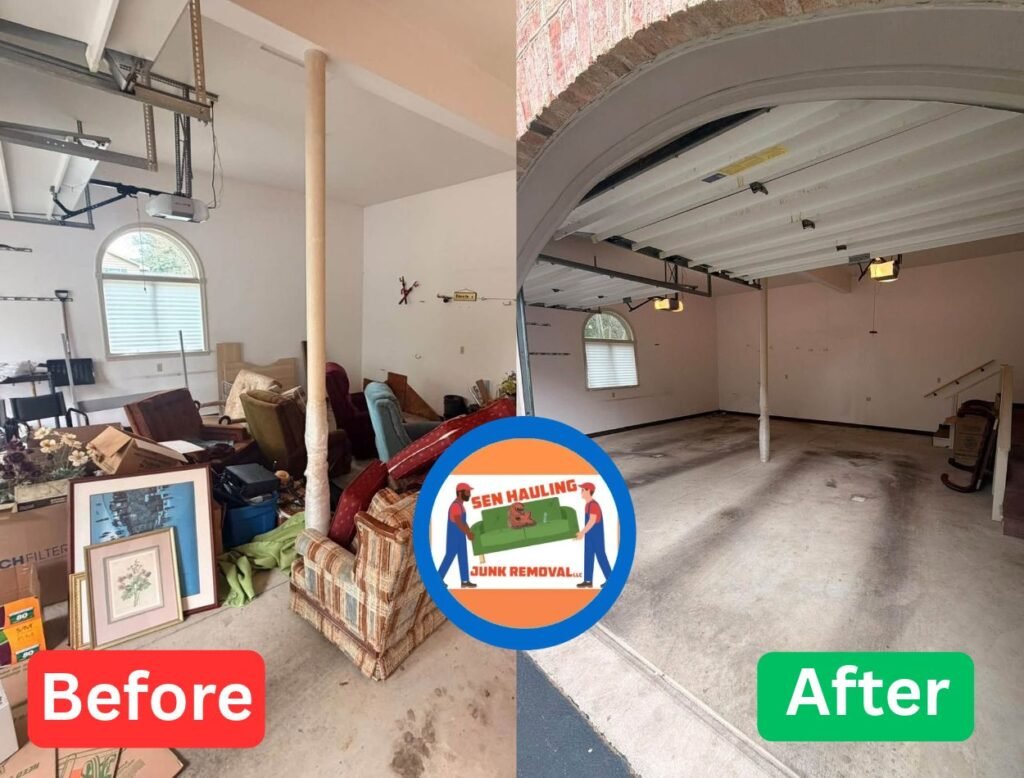
A local junk removal crew can clear the remaining furniture, mattresses, appliances, garage and basement in one or two visits, without you being there. Ask the crew to:
- Send a photo or video quote before the job
- Set aside any photos, papers or valuables they find
- Donate and recycle what they can before anything goes to disposal
- Send before-and-after photos and the receipts for the executor’s records
Then book cleaning, any repairs and the listing photos. The house is ready.
Cincinnati-Area Quick Reference
| Need | Where to go | Notes |
|---|---|---|
| Probate questions | Hamilton County Probate Court, 513-946-3600 | Ask about simplified options for smaller estates |
| Any Post Office | Executor files in person with proof of appointment | |
| Furniture and household donations | St. Vincent de Paul, 513-421-2273 | Free pickup |
| Furniture, appliances, building materials | Habitat for Humanity ReStores, 513-721-4483 | Free pickup, items outside or in the garage |
| Bulk items | City of Cincinnati 311 / 513-765-1212 | Five items per appointment, City trash service only |
| Hazardous products | Hamilton County R3Source events | Registration required; check the current schedule |
| Suburbs | Your parent’s city or township | Rules vary; many use Rumpke with their own bulk rules |
FAQs: Cleaning Out a Parent’s House From Out of State
How do you clean out a parent’s house when you live out of state?
Start from home: confirm who the executor is, call the insurer, keep utilities on, forward the mail and line up a local helper. Do a video walkthrough so family can claim items, then make one well-planned trip for papers, valuables and vendor meetings. Local estate sale, donation and junk removal companies can finish the job and send you photos.
Can I be an executor if I live in another state?
Often, yes. In Ohio, a nonresident named in a will can usually serve as executor if related to the deceased by blood or marriage. Other states have their own rules, some require a bond or a local agent, so check with the probate court or an estate attorney.
How long does it take to clean out a deceased parent’s house?
The sorting and decisions take the longest, often several weeks. With a plan, the physical work usually fits into one family visit plus one or two days of professional cleanout, and an estate sale adds a few weeks of preparation.
Who pays for cleaning out a deceased parent’s house?
Reasonable cleanout costs are usually paid by the estate, including junk removal, cleaning, utilities and insurance. Keep every receipt and ask the estate’s attorney how to record them.
Does homeowners insurance cover a vacant house after a death?
Often only for a limited time. Many policies reduce coverage after 30 or 60 days of vacancy and can exclude theft, vandalism and water damage. Call the insurer as soon as possible and ask about a vacancy endorsement or vacant-home policy.
Should I keep the utilities on in an empty house?
Yes, until the cleanout and repairs are done. Heat prevents frozen pipes, and power keeps lights, alarms and sump pumps running. Ask the utility companies to send bills to the executor.
How much do estate sale companies charge?
Most charge a commission of roughly 30% to 50% of sales, and in the Cincinnati area 35% to 50% is common. Many also have a minimum expected sale value, and cleanout of leftover items may cost extra.
What do you do with furniture no one wants?
Donate clean, usable pieces through St. Vincent de Paul or Habitat ReStore pickups, sell anything with real value, and have a junk removal crew haul away the rest. City bulk pickup works for a few items, but not for a whole house when you can’t be there to set things out.
Bringing It All Together
Clearing out a parent’s house from far away is mostly a coordination job. Protect the house first, build a small local team, let video do the walking, and use one trip for the decisions only you can make. When the family has taken what matters, a local crew like Sen Hauling & Junk Removal can handle the heavy lifting, the donation drop-offs and the final cleanout across Cincinnati, from Westwood and Price Hill to Sharonville, Evendale and Hyde Park, and send you the photos to prove it’s done.