

A mattress is the one household item almost guaranteed to defeat every easy option. You can’t donate it in most cases. You can’t put it in a bin. Resale is effectively zero. And if you leave it at the curb on the wrong day, it may simply stay there.
Mattress disposal has more rules attached than any other piece of furniture, for reasons that make sense once you know them: mattresses are a known vector for bed bugs, they’re bulky enough to cause problems at transfer stations, and most charities are legally or practically barred from reselling used ones. This guide covers what your real options are, what each one requires, and the one mistake that turns a simple disposal into a much larger problem.
For the wider picture of clearing out furniture, see our guide to getting rid of old furniture in Cincinnati.
Why Charities Usually Say No
This surprises people, so it’s worth stating plainly: most charitable organisations will not accept a used mattress, and it isn’t because they’re being fussy.
The reasons are consistent across organisations. Health regulations in many jurisdictions restrict the resale of used bedding. Bed bug risk is severe enough that one infested donation can contaminate an entire warehouse and shut down a store. And a mattress they can’t sell becomes a disposal cost they have to absorb.
A small number of organisations do accept mattresses in excellent, clearly unused condition — a guest room mattress slept on a handful of times, still with tags, no stains at all. If yours is genuinely in that category, call first and send photographs. Otherwise, assume donation is not available and move to the routes below.
What’s Actually Inside a Mattress
This matters because it determines what happens to it afterwards, and because it explains why mattresses are worth recycling where the option exists.
A standard innerspring mattress is roughly:
- Steel coils — melted down and refined into new steel products
- Foam — shredded for carpet padding, insulation or animal bedding
- Cotton and fibre — processed into insulation or textile products
- Wood (in a box spring frame) — chipped for mulch, particle board or fuel
Most of a mattress is therefore recoverable in principle. What isn’t easily recovered are the adhesives and some plastics bonding it all together, which is exactly why whole-mattress recycling needs a dedicated facility rather than a general recycler.
Memory foam and latex mattresses have no steel, which changes the economics — there’s less recoverable value, and fewer facilities accept them.
Your Real Options
Municipal bulk collection
Cincinnati collects certain large items on a scheduled basis, and mattresses are commonly included — but with conditions on scheduling, quantity and how the item is presented. Get the specifics right before you drag anything to the kerb, because an item set out on the wrong day or in the wrong condition is left there, and you’ve now got a mattress on the front lawn.
We’ve broken down the city’s rules in what Cincinnati’s bulk item pickup will and won’t take.
This route is free and legitimate. Its limits are that you have to move the mattress to the kerb yourself, you have to wait for your collection day, and it does nothing for a mattress that’s on the second floor of a house with a narrow stair turn.
Mattress recycling facilities
Some recyclers and transfer operations accept mattresses specifically for dismantling. Availability varies and acceptance is not universal — call ahead and ask directly whether they take mattresses, whether they take foam and latex as well as innerspring, and whether they accept drop-offs from households.
Retailer take-back on delivery
If you’re replacing the mattress, ask the retailer at the point of ordering whether they remove the old one. Many do as part of delivery. This is by far the least effort of any route, and it only works if you arrange it before delivery day — the crew will not take it as a favour on arrival.
Professional removal
The route that handles the part the others don’t: getting the mattress out of the bedroom, down the stairs and away, on a day you choose. Worth it when the mattress is upstairs, when there are several, when you’re clearing a property, or when it’s going out alongside other furniture in one trip.
The Bed Bug Rule Everybody Should Know
If there is any chance the mattress has bed bugs, say so to whoever is collecting it, and wrap it before it leaves the room.
This is not a formality. Moving an infested mattress through a house unwrapped spreads the problem to other rooms. Putting it into a truck with other households’ furniture spreads it further. Donating it, even unknowingly, can take out an entire charity warehouse.
The correct handling is straightforward:
- Get a sealed mattress disposal bag — they’re sold at hardware stores and are large plastic sleeves sized for the mattress.
- Encase the mattress in the room where it sits, not in the hallway and not outside.
- Seal it with tape.
- Mark it clearly so nobody downstream treats it as a donation candidate.
- Tell the removal crew or the collection service before they arrive.
Any reputable removal company would far rather know in advance and plan for it than discover it in the truck.
Getting It Out of the House
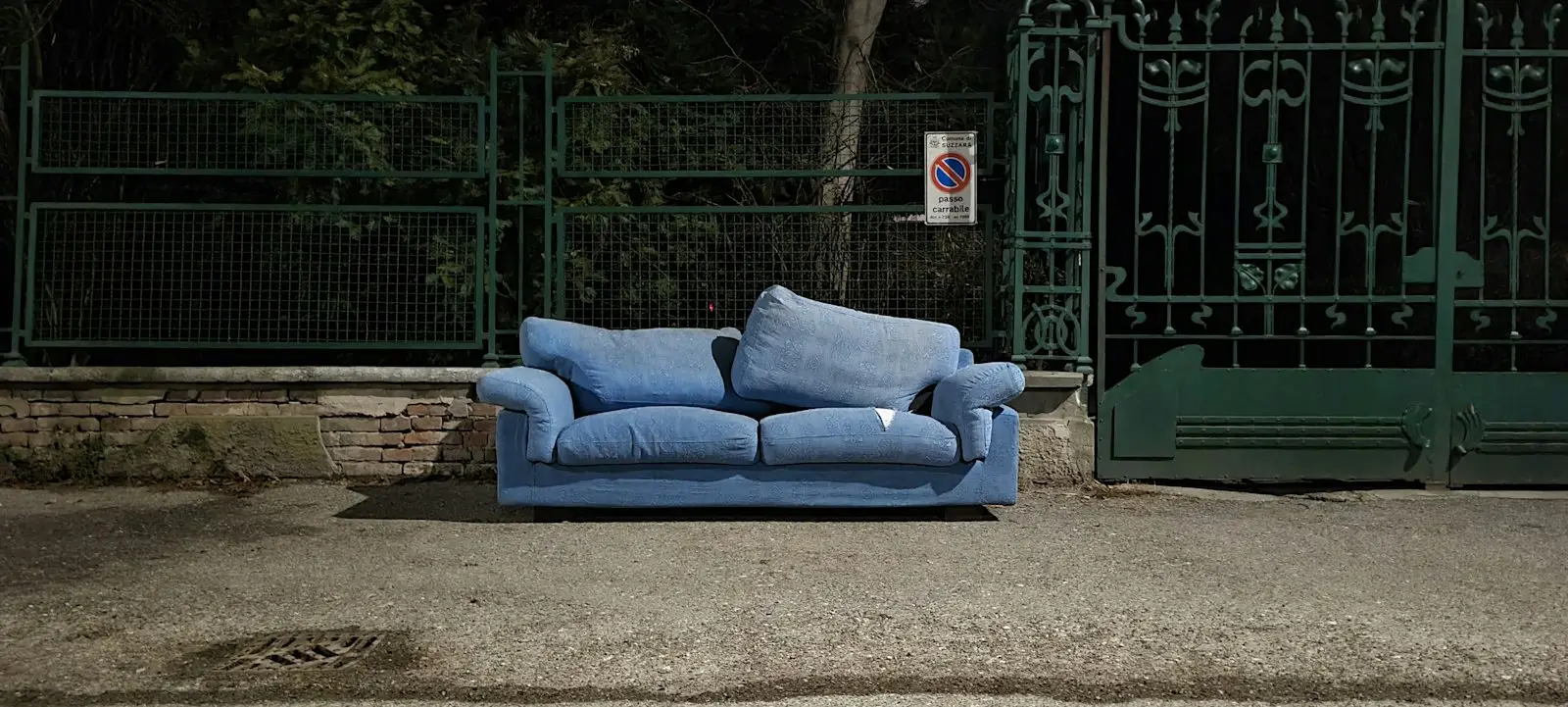
Mattresses are not heavy so much as uncooperative. A queen innerspring is manageable for two people on the flat, and genuinely difficult on a turning staircase because it flexes in the middle and catches.
What helps:
- Two people, always. One at each end, with the person going backwards setting the pace.
- Bend it the short way, not the long way. Folding a mattress across its width gives you a shorter object; folding lengthways gives you a floppy one.
- Use a mattress bag even without bed bugs. It gives you something to grip, keeps the stairs clean, and stops the fabric snagging on the handrail.
- Take the bedroom door off its hinges if the turn out of the room is tight.
- Box springs don’t bend at all. A box spring that came up a tight stairwell may have been carried before a banister was fitted. If it genuinely won’t come down, it can be cut into sections — the frame is thin timber and staples.
Memory foam mattresses are heavier than they look and have no internal frame, so they behave like a very large sandbag. They need two people and a bag more than an innerspring does, not less.
What Not To Do
Don’t leave it at the kerb on a random day. Outside a scheduled collection, it’s illegal dumping, it can attract a citation, and it sits there in the meantime.
Don’t put it in a dumpster that isn’t yours. Mattresses are commonly excluded from dumpster rental terms, and an unauthorised one can land the dumpster’s owner with a surcharge.
Don’t cut it up to fit the bin unless you have confirmed your waste service accepts it that way. Most don’t, and you’ve turned one awkward item into several.
Don’t store it in the garage “for now.” Garages are where mattresses go to acquire mould, mice and a much worse smell. It will not be easier to deal with in six months.
Don’t give it away without disclosing condition. Passing on a mattress with a known problem is how infestations travel between households.
Frequently Asked Questions
Can I donate a used mattress?
Usually not. Most charities decline used mattresses because of health regulations around reselling bedding and the risk of bed bugs. A nearly-new mattress in excellent condition is occasionally accepted — call ahead and send photographs rather than turning up with it.
Will Cincinnati pick up a mattress at the kerb?
Mattresses are commonly covered by the city’s bulk item collection, subject to scheduling and presentation rules. Check the current requirements for your collection day and quantity limits before setting anything out, since an item put out incorrectly is simply left.
Are mattresses recyclable?
Most of a mattress is recoverable — steel coils, foam, fibre and the timber in a box spring all have end uses. But it needs a facility set up to dismantle them, not a general recycler. Availability varies, so call and ask specifically before making the trip.
How do I dispose of a mattress with bed bugs?
Seal it in a mattress disposal bag in the room where it is, before moving it anywhere. Tape it closed, label it, and tell whoever is collecting it. Never donate it or pass it on, and never move it through the house unwrapped.
Does the shop take the old mattress when they deliver the new one?
Many retailers will, but it has to be arranged when you order, not on delivery day. Ask specifically whether removal of the old mattress is included and whether there’s a condition it has to be in.
Can a box spring go out with the mattress?
Generally yes, though some collection services count them as two items against a quantity limit. Box springs don’t flex, so getting one down a tight stairwell is often harder than the mattress itself.
What about a mattress in a rental or an estate property?
The same rules apply, but the practical problem is usually volume and timing — several mattresses, a deadline, and nobody on site. That’s a case for a scheduled removal rather than waiting on collection days.
The Bottom Line
Mattress disposal only becomes complicated when you assume it’ll work like any other piece of furniture. Accept that donation is unlikely, check the city’s collection rules before anything reaches the kerb, bag it if there’s any question about bed bugs, and get a second person for the stairs.
If it’s one of several items going out, it’s usually easier to have the whole lot taken in one trip — SEN Hauling covers Westwood, Price Hill, Cheviot, Wyoming, Reading, Sharonville, Evendale and Hyde Park, plus Northern Kentucky. Related: getting rid of old appliances, which have rules of their own.